Enter password
Email gaeul.leee@gmail.com for access.
A new business messaging platform inside WhatsApp
I led the end-to-end design of WhatsApp Flows, a new way for people to complete complex business tasks directly inside WhatsApp. It launched globally at Meta Conversations 2023 and became the foundation for business messaging across banking, healthcare, commerce, reservations, and support.
- 1.6K businesses live within 6 months of global launch
- 118K messages received daily through Flows
- 8.2x higher conversion for Lenovo
- 158% conversion increase and 2.6x revenue for Sefamerve
- 49% lift in diagnostic test bookings for Apollo 24/7
- Adopted across ads and GenAI entry points
Business messaging was growing,
but task completion was broken
Every day, 473 million messages were exchanged between people and businesses on WhatsApp. But the moment a task got even slightly complex, people were pushed out: redirected to mobile websites, dropped into rigid chatbots, or routed to call-center support.
Alternative 01
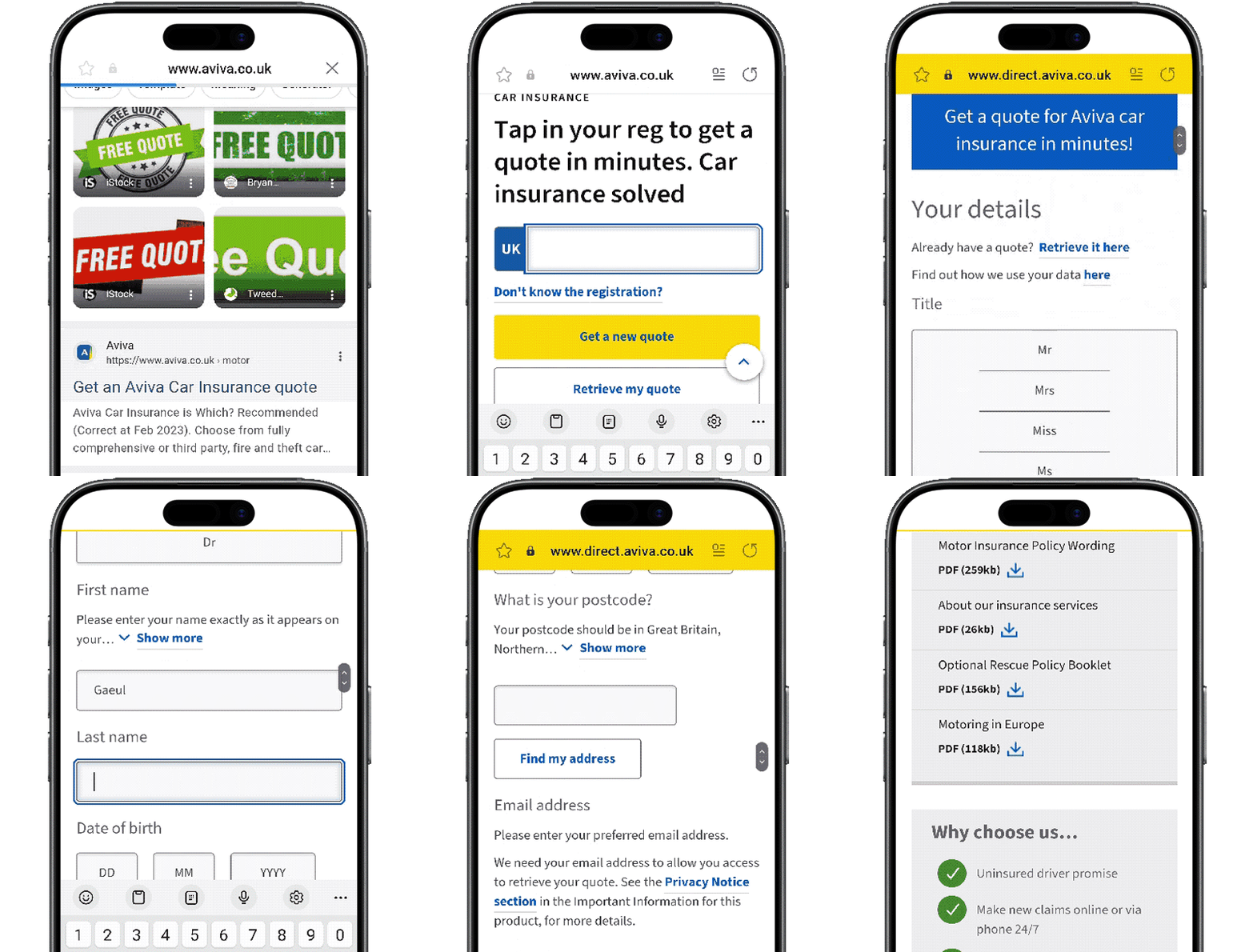
Mobile web
Users have to learn a new interface, hunt for the right section, and fight through banners and pop-ups before getting to the task.
Alternative 02
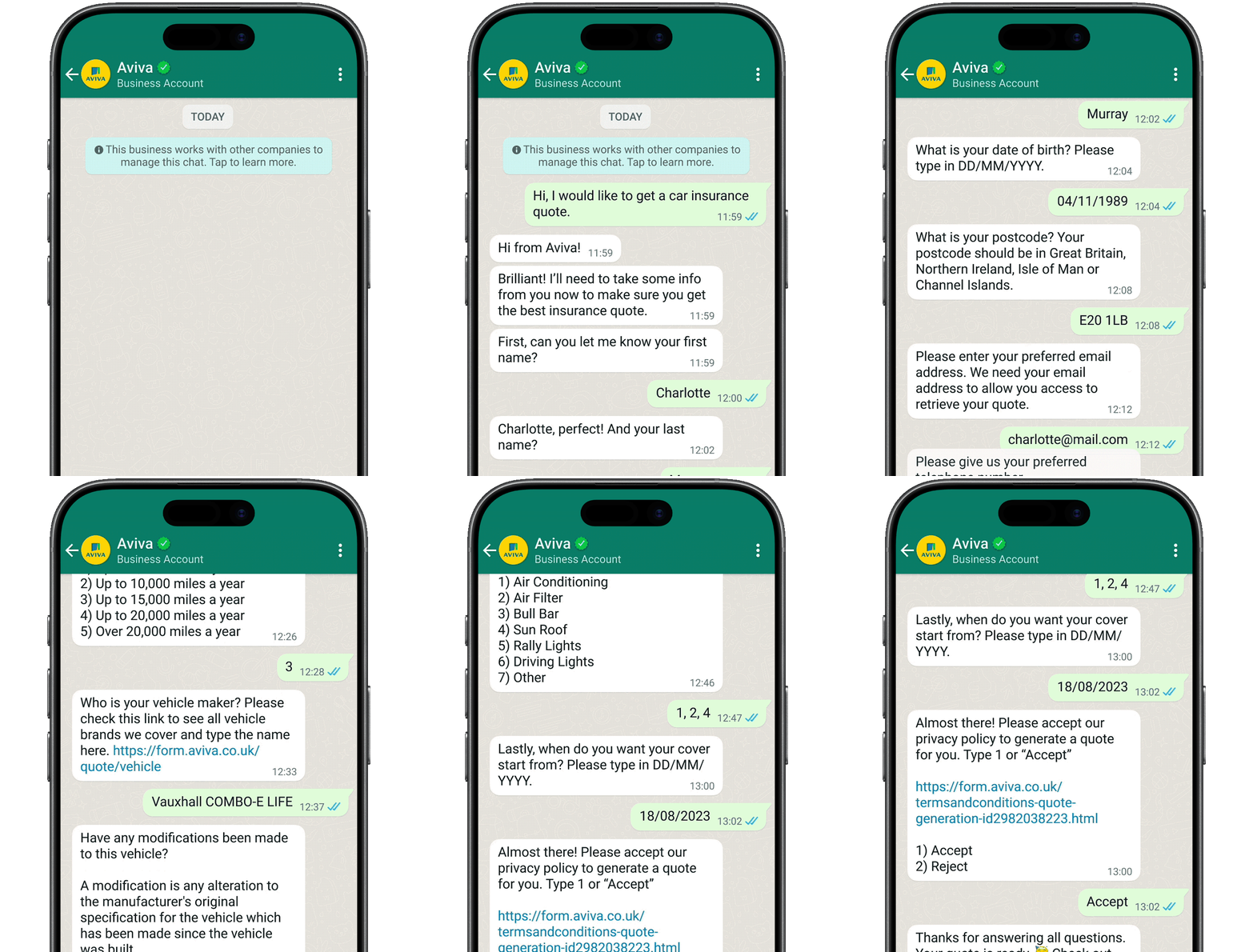
Chat bot
Chatbots ask question after question, go in circles, then redirect back to the website, the exact place users were trying to avoid.
People wanted to finish the task
where the conversation started
Research showed switching apps made simple tasks feel harder, and chatbot menus weren't built for anything complex. People wanted the convenience of WhatsApp, but the experience kept making them leave it.
Pain 01
Fragmented multi-channel experience
Users had to leave WhatsApp to finish tasks. How might we help users complete tasks entirely within WhatsApp?
Pain 02
Limited chatbot interactions
Basic menus couldn't handle complex needs. How might we support richer, more flexible interactions inside chat?
Pain 03
Difficult human escalation
Moving from automation to a real agent was clunky. How might we make the handoff from automation to a human feel seamless?
One product,
many industries
The hard problem wasn't designing one good task flow. It was building a platform flexible enough for appointments, quotes, shopping, surveys, authentication, lead generation, and support, across thousands of businesses we'd never meet.
Too prescriptive, and it wouldn't fit anyone's real use case. Too open, and the experience would fragment and stop feeling like WhatsApp.

Vision
Help people get things done as easy as sending a message. Completing a business task inside WhatsApp should feel that simple.
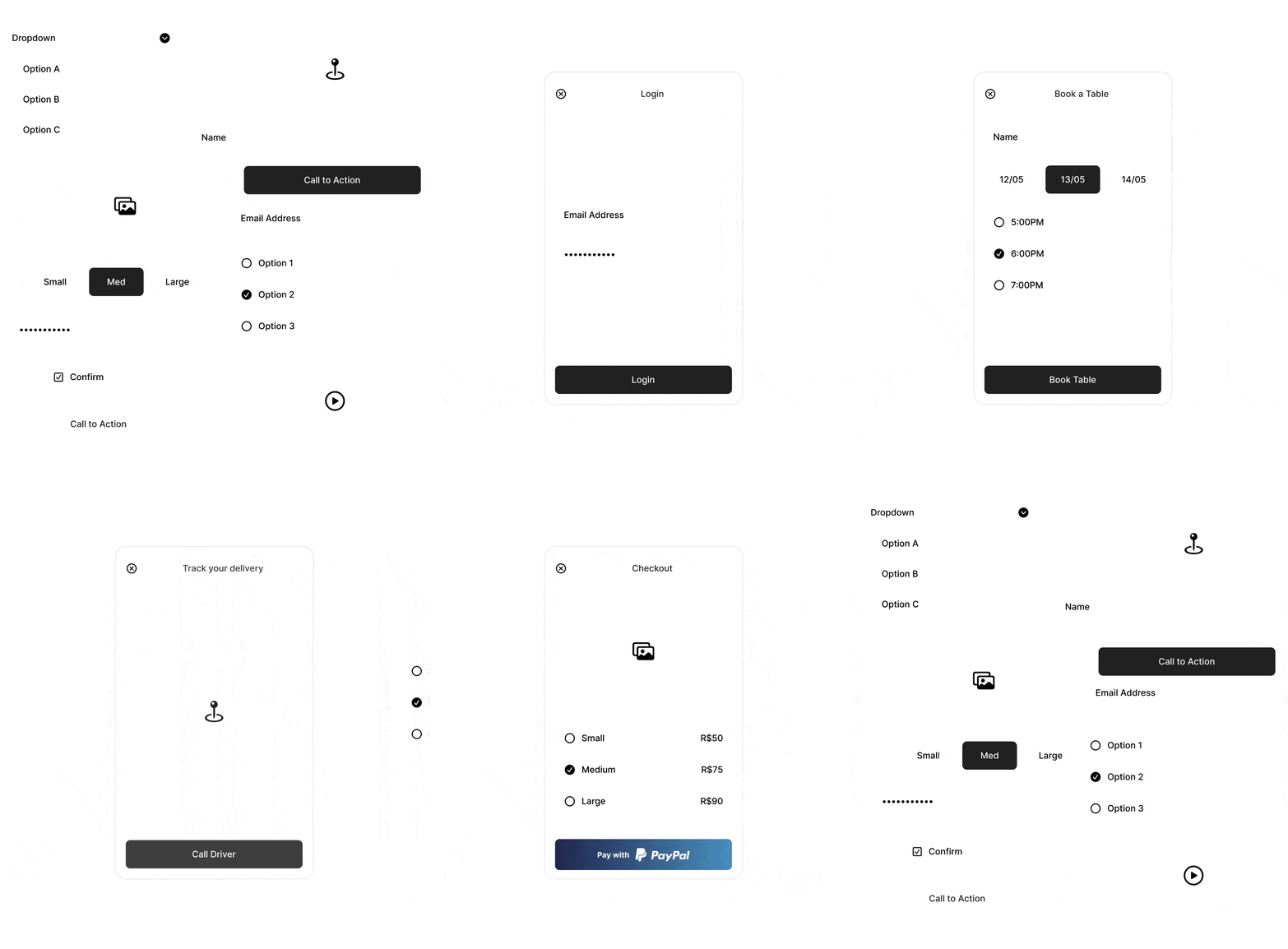
Bespoke components
Flexible, high-utility components with built-in functionality, logic, and interactivity, so businesses can tailor experiences across industries.
Where Flows could create
the most value first
I worked with the team to segment the ecosystem across end clients, business solution providers, and platforms, then interviewed business partners to find where Flows could land hardest first. We mapped use cases against verticals and prioritised by traction, utility, and engineering complexity.
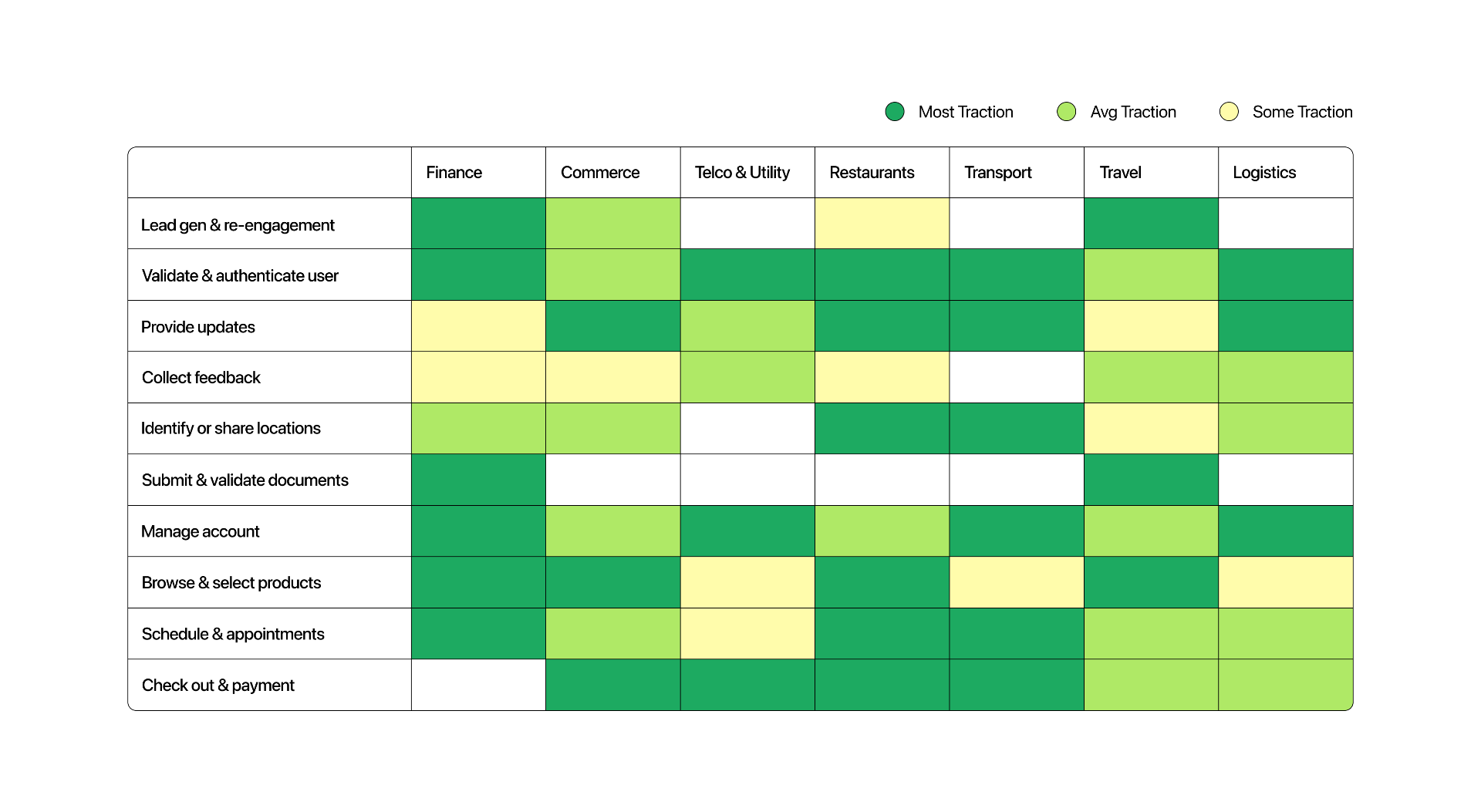
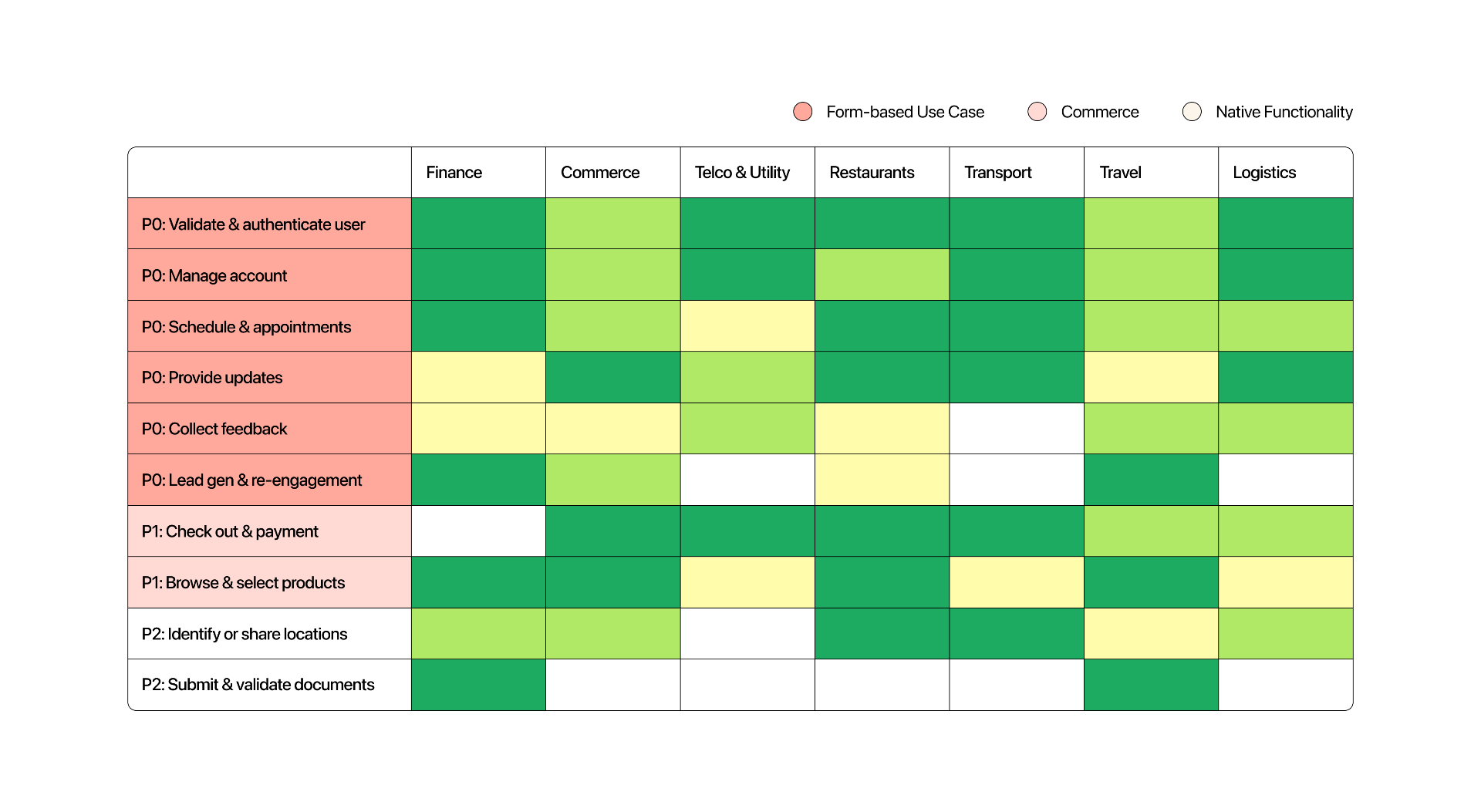
Finding the highest-leverage use cases
Mapping use cases against industries helped us see the patterns that repeated everywhere, and the ones that were valuable but too niche to lead with.
A platform,
not a product
I designed Flows as a system of three layers, so businesses could configure their own flows without breaking the WhatsApp experience.
System
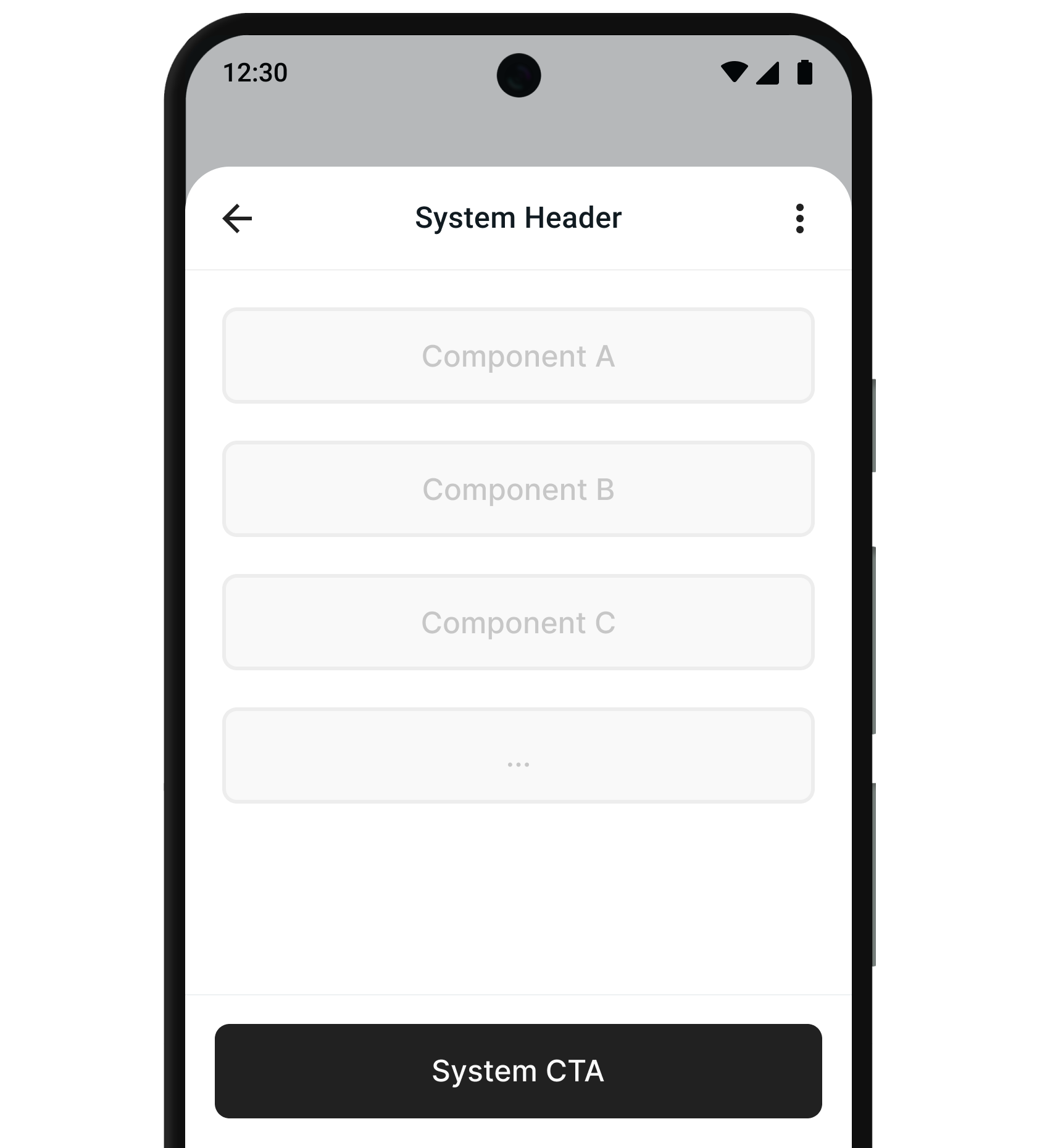
System components
System components are core UX elements that can’t be customised, like the header, footer, and navigation.
Bespoke
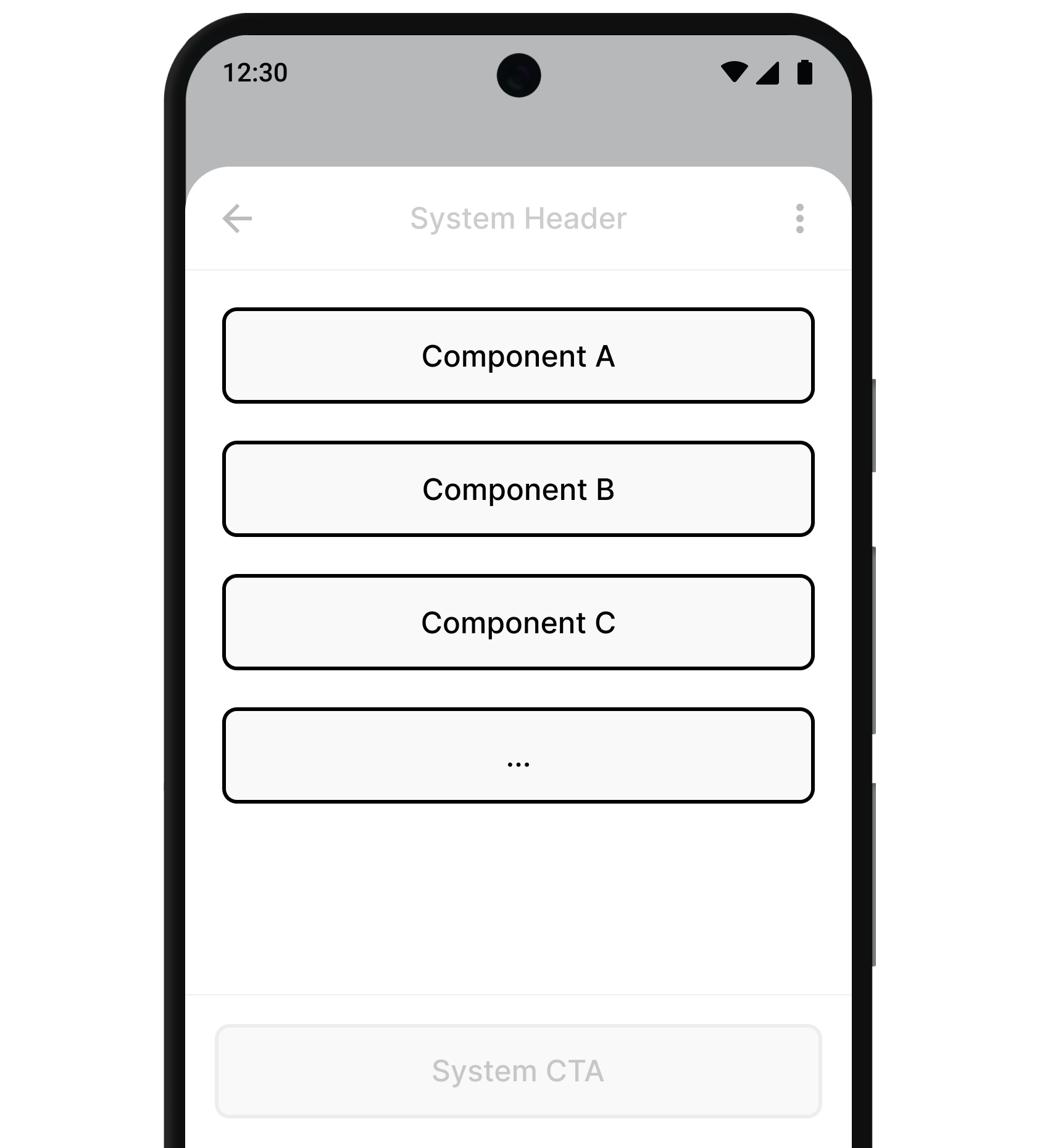
Bespoke components
Components are individual building blocks that allow businesses to create custom experiences.
Layouts
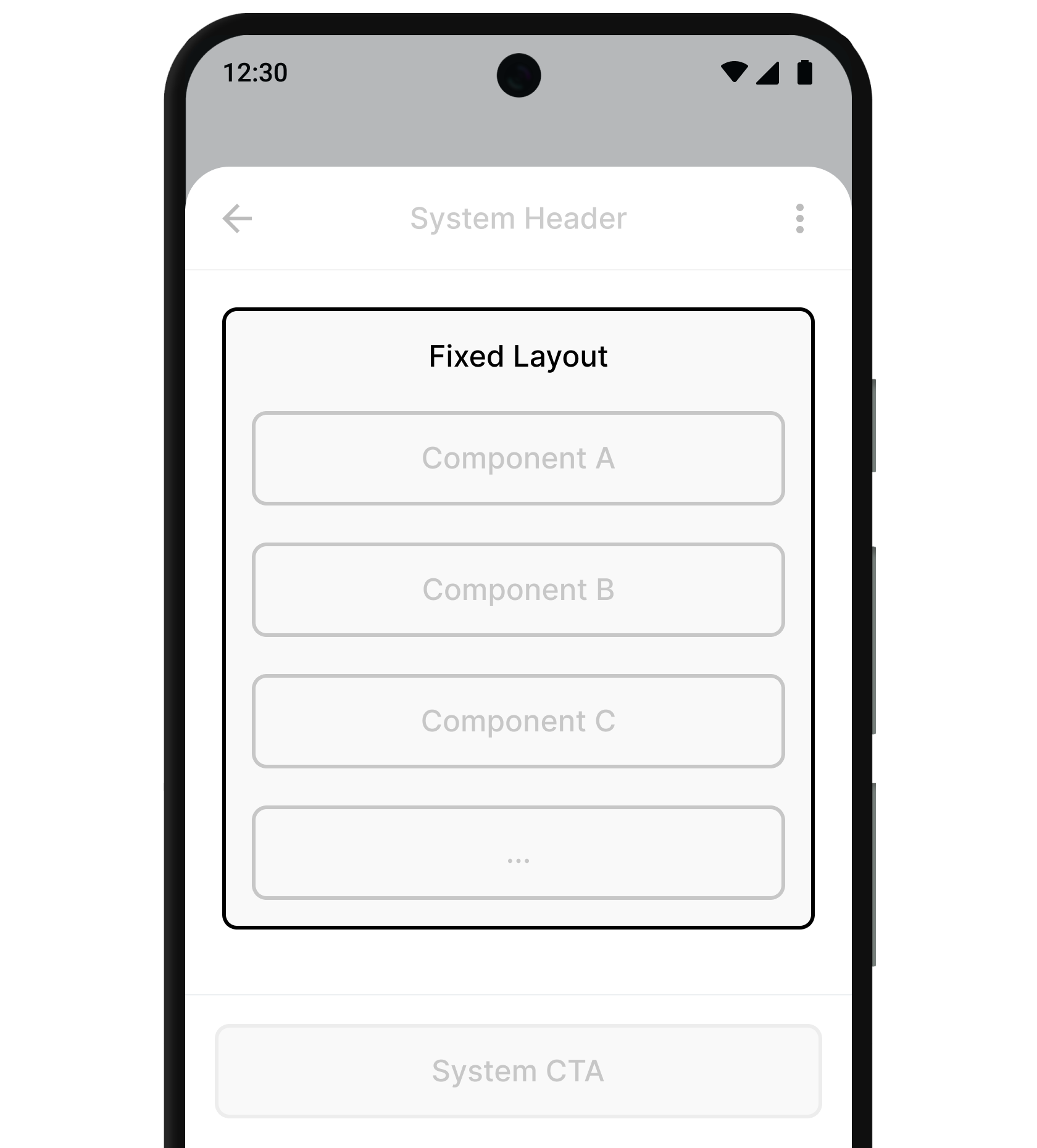
Ready-to-go layouts
Pre-built structures for common use cases like bookings and quotes, so businesses could ship without designing from scratch.
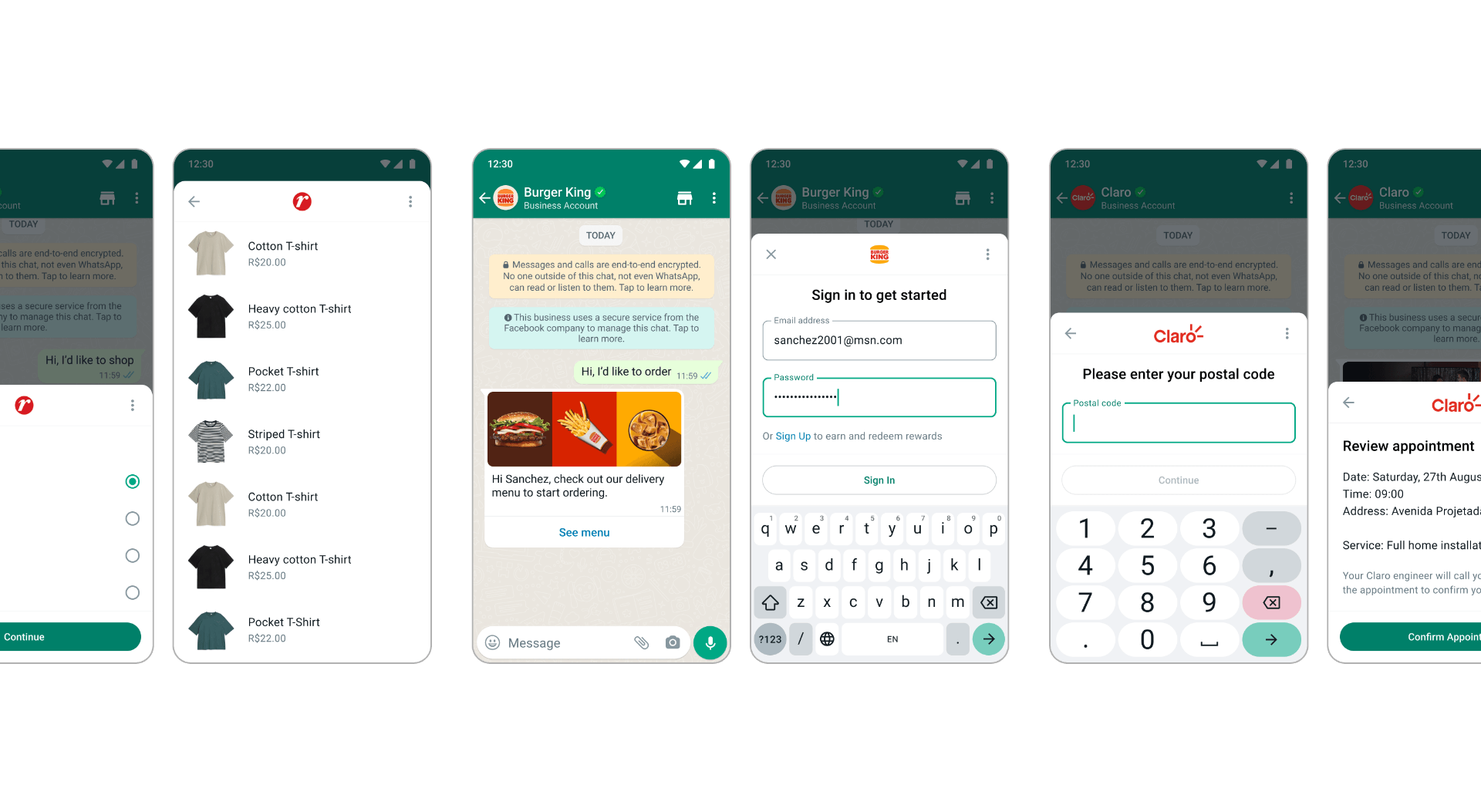
One system, every business
Alpha partners built distinct Flows from the same set of components.
Designing for billions meant
designing for constraints first
Flows had to work on Android and iOS, in dark mode, in RTL languages, with large text, with VoiceOver, with localised content from businesses we'd never see. I built the system on native platform patterns so people didn't have to learn anything new, and documented accessibility and edge cases so the system could scale beyond the design team.
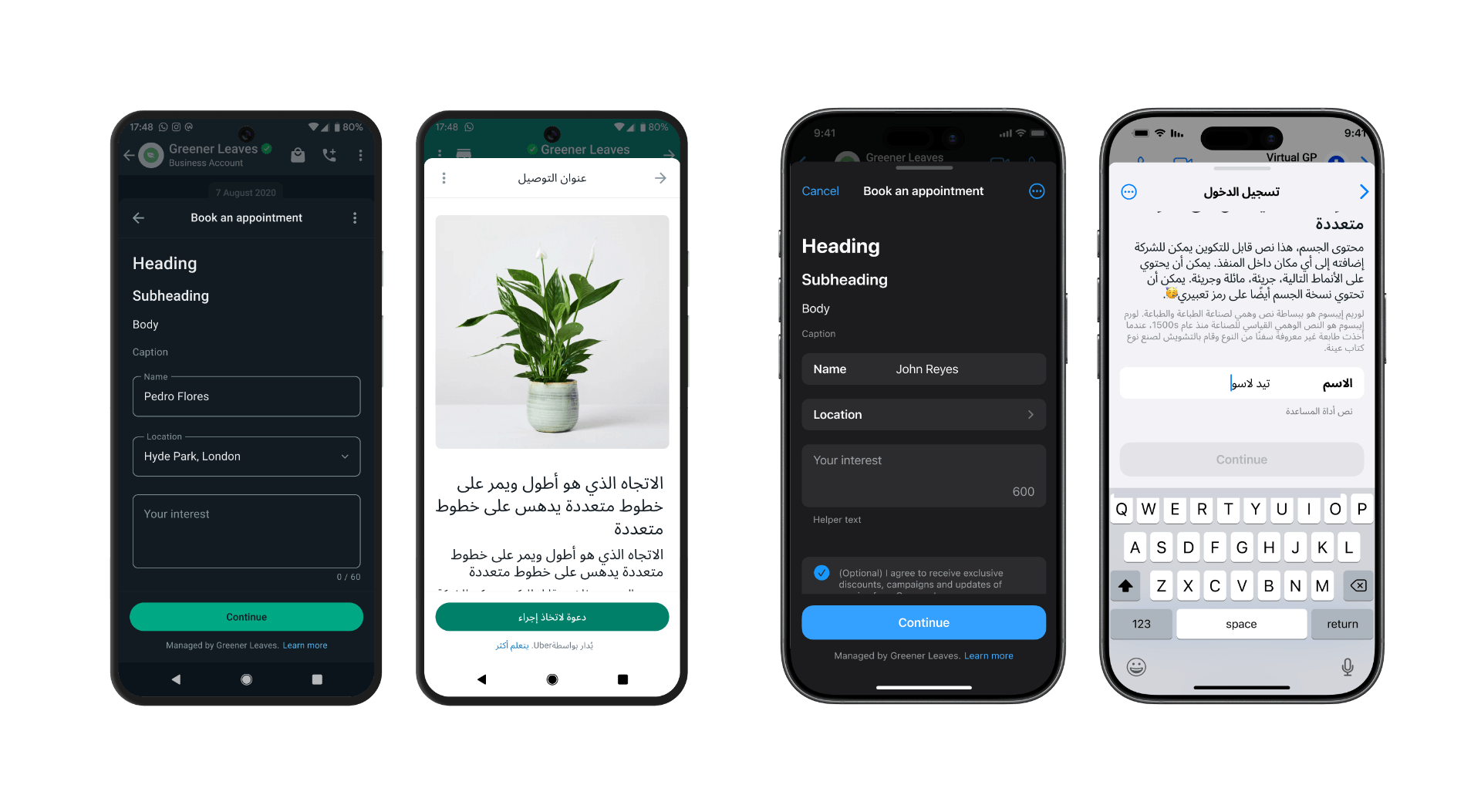
Accessibility stress tests
Dark mode, RTL, large text, VoiceOver, localization, color contrast, low-quality assets, long business names.
Balancing business branding
with WhatsApp trust
User testing surfaced a trust problem: people could complete the task, but they weren't always sure where they were. Some thought they'd been redirected to a company website.
I explored a full branding spectrum, from minimal disclosure to full business theming, and stress-tested each option against five principles: clarity, sense of place, transparency, consistency, and scalability.
Low
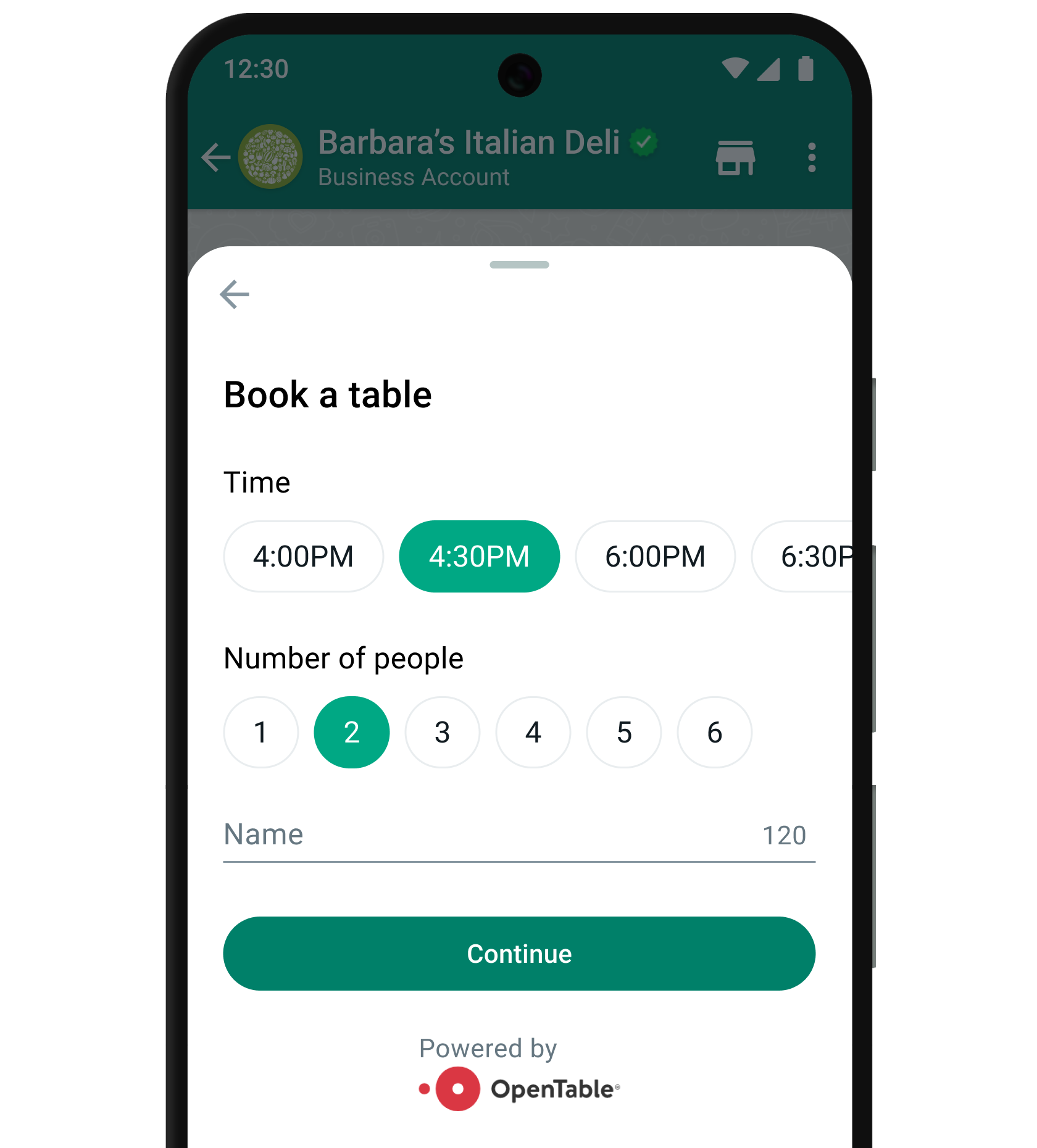
Logo only
A business logo in the footer. Minimal disruption to WhatsApp, but weak business identity.
Medium
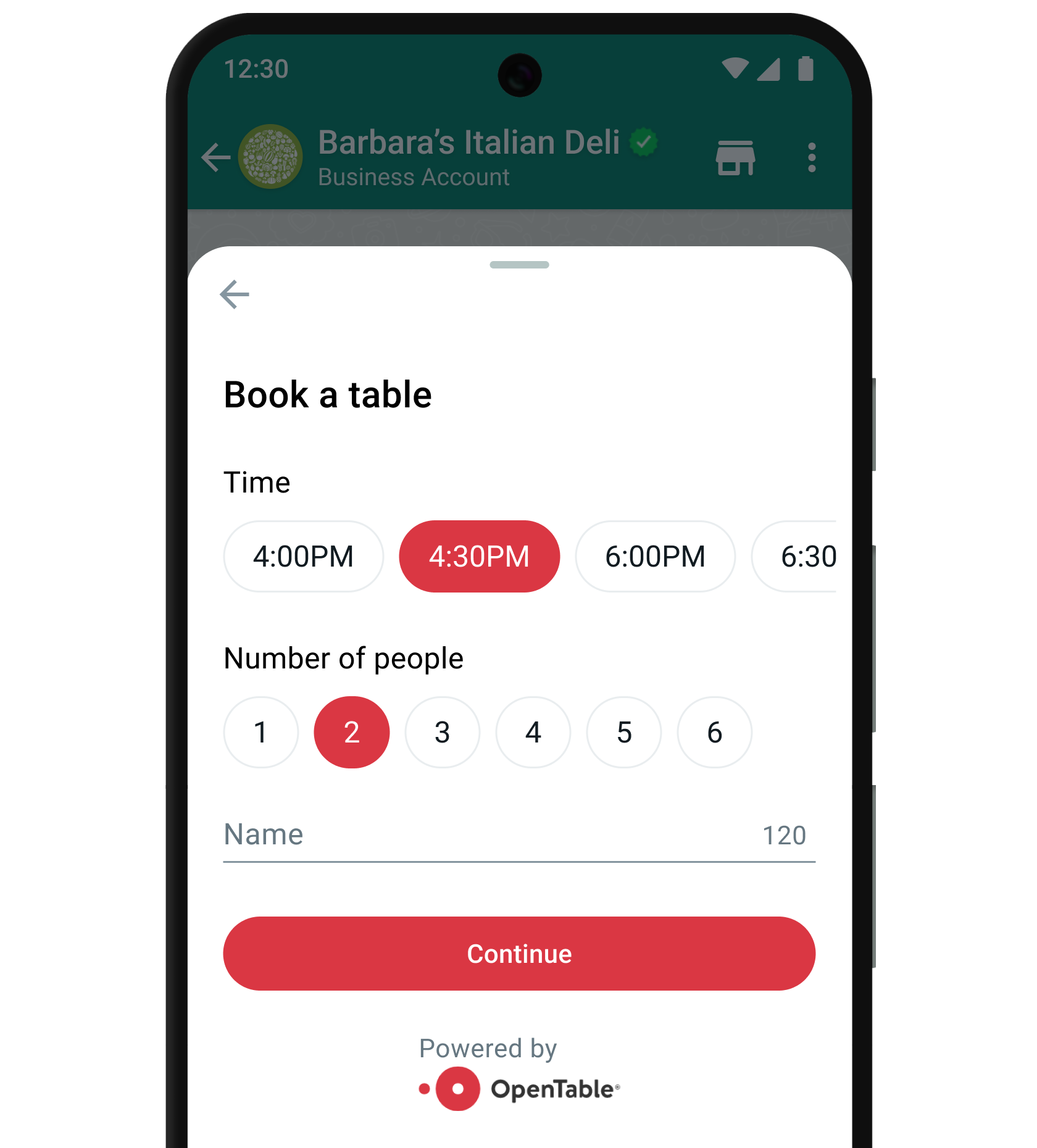
Logo + theming
A single accent colour from the business brand. Stronger identity, while the UI stays WhatsApp-native.
High
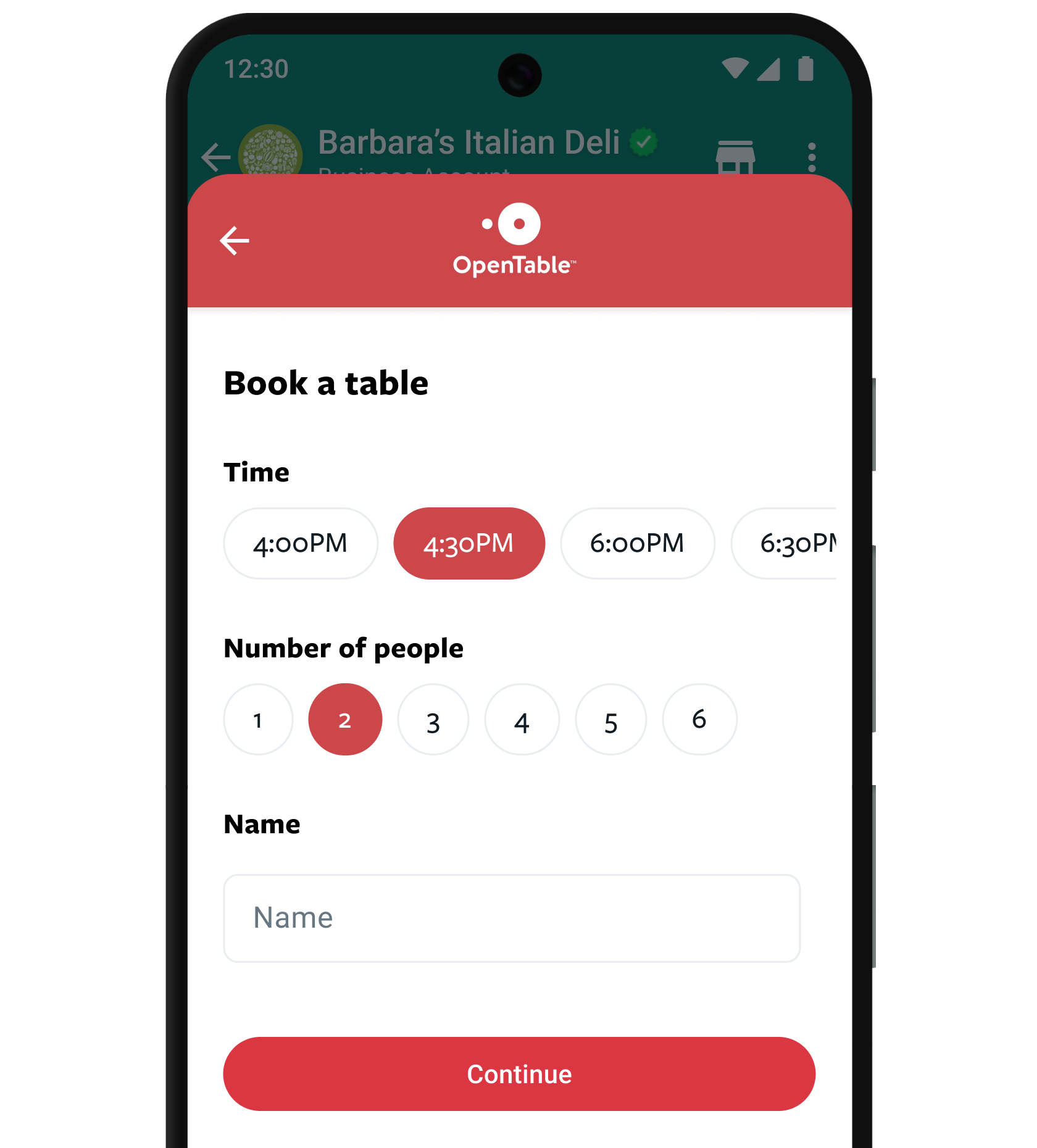
Full customisation
Header, colours, typography, and layout all match the business brand. Strongest identity, but the experience feels like a separate app.
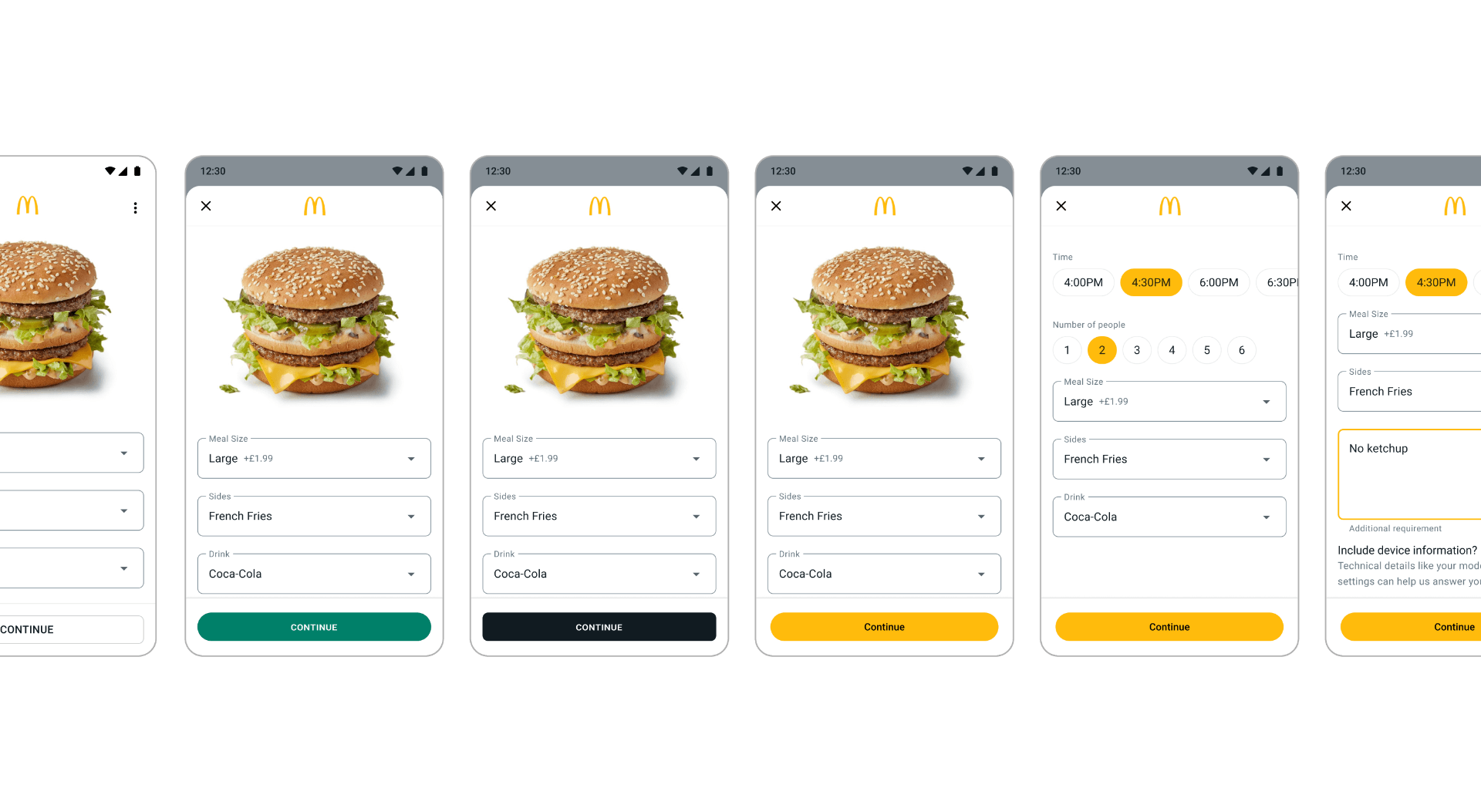
Stress-testing the spectrum
I tested every approach against real brand assets, button styles, accessibility states, and extended flows.
The heavier end broke under pressure. Brand colours clashed with warning and error states, contrast failed for accessibility, and logos couldn't be quality-checked across thousands of partners WhatsApp would never manually verify. With every option mapped against five principles, clarity, sense of place, transparency, consistency, and scalability, the sweet spot became clear.
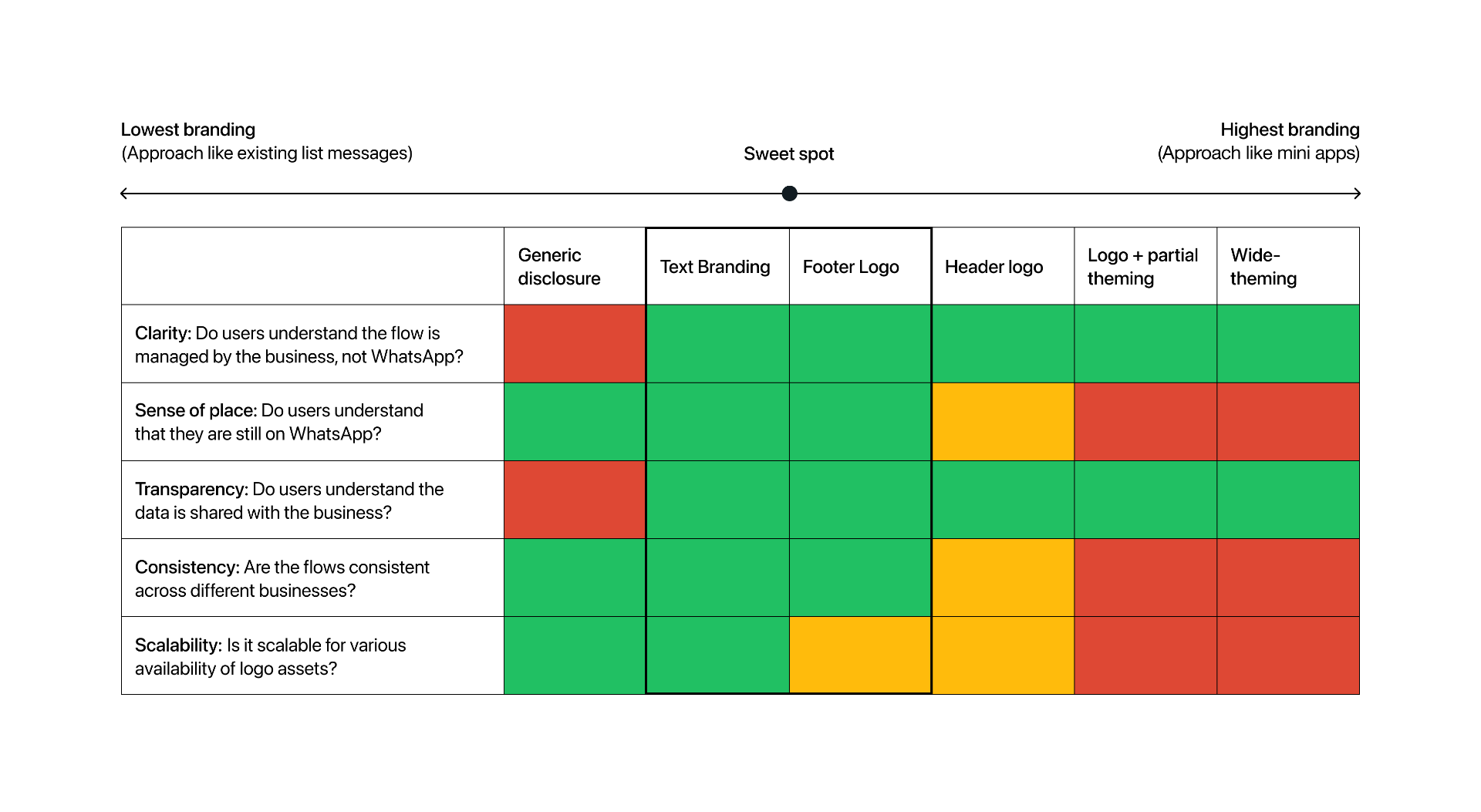
Finding the sweet spot
Text branding and footer logo were the only options that held up across all five principles, the middle ground between generic disclosure and full theming.
Built so businesses could ship
without us reviewing every flow
Because businesses would build their own Flows after launch, quality couldn't depend on us reviewing each one. I created interface guidelines as the source of truth for partners and the growing design team, then ran alpha testing to find the gaps in components, guidelines, and business support.
Image caption
Placeholder caption.
In beta, I broke the user journey into top, mid, and bottom funnels and proposed roadmap fixes for the conversion-heavy steps, including progress indicators and final-step differentiation.
Image caption
Placeholder caption.
Launched at Meta Conversations 2023,
then expanded across surfaces
Flows launched globally as a new way for businesses to help people complete structured tasks inside WhatsApp, supporting appointment booking, quote requests, surveys, authentication, and shopping.
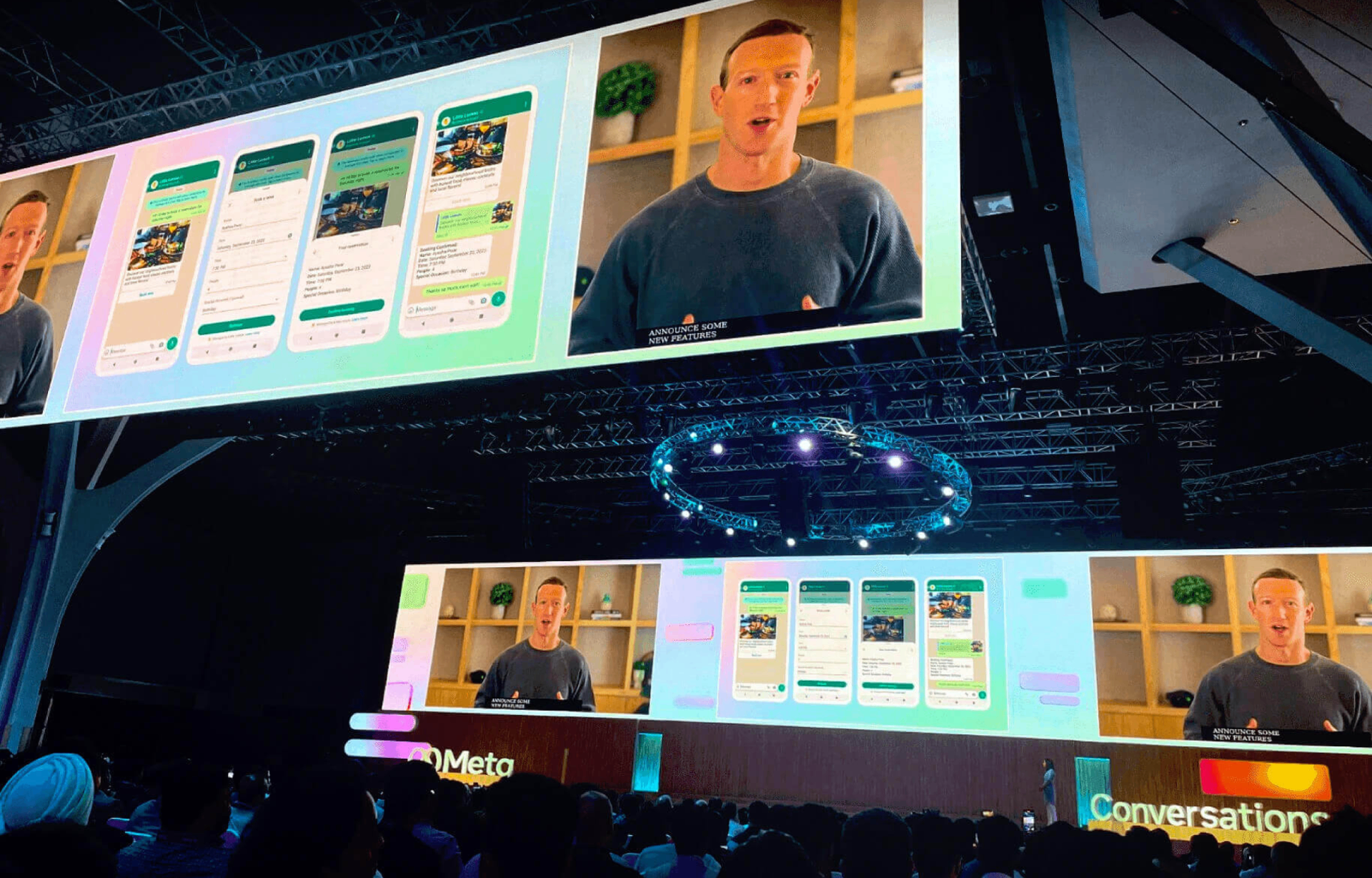
Image caption
Placeholder caption.
Image caption
Placeholder caption.
Once the core product proved its value, other business teams adopted Flows as the interaction layer for their own entry points, including click-to-WhatsApp ads and GenAI initiatives.
Image caption
Placeholder caption.
The real product was
the system, not one flow
The hard part wasn't designing a flow. It was designing something that could feel simple for users, valuable for businesses, and scalable for WhatsApp, all at once. Before this work, complex business tasks pushed people out of chat. After it, businesses could bring those tasks back in.
0K
businesses went live within 6 months
0K
messages sent daily within 6 months
0
industries/sectors covered
Innovate marketing campaign award
Kotak Life Insurance won Most Innovative Marketing Campaign Award at the India Insurance Summit 2024, with WhatsApp Flows.
Media coverage
It generated significant revenue for Meta and created a new multi-billion-dollar business model for Business Solution Providers worldwide.